


Giclée is a fine-art digital printing process used to create high-quality prints on canvas or paper.
A giclée print can be an exceptionally accurate reproduction of an original painting. While giclée printing is still gaining recognition in some markets, it is already widely used in the United States and Europe. Giclée prints are collected, exhibited in museums, acquired for home decoration, used in offices, hotels, clubs, and restaurants, and often chosen as memorable gifts.
To create a high-quality print, the original artwork must first be photographed or scanned at very high resolution. This article uses such an image as an example. Move your cursor over the image to see the high level of detail in the photograph. Unfortunately, some earlier works do not have files of comparable quality, because the technology available at the time was less advanced and many of the works now belong to private collections.
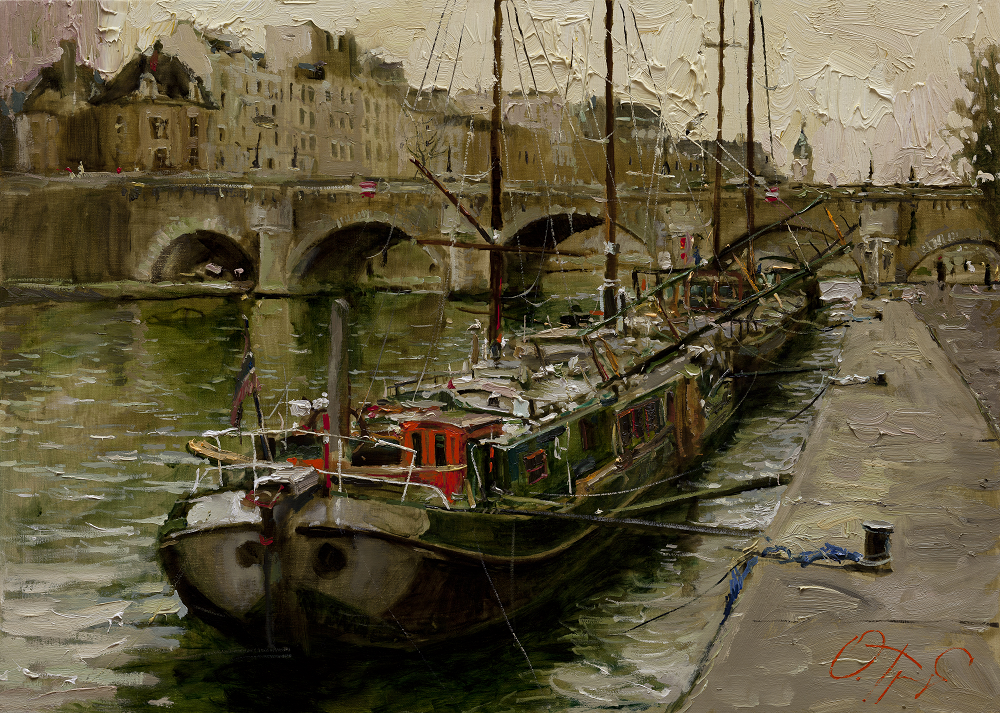
In the next stage, the image is transferred to natural or synthetic canvas using high-tech equipment capable of reproducing more than 16 million colors. This wide color range, together with infinitesimal ink drops of varying sizes, makes it possible to reproduce the finest details, subtle light and shadow, the character of the work, and the texture of the brushstrokes.
The final stage of creating a giclée print may include hand-applied paint, at the customer’s request, to bring the reproduction even closer to the original painting. Each print is signed and numbered, with the edition size clearly indicated. The edition is usually limited to 50–100 prints, which makes each copy more valuable and unique.
If you are interested in ordering a reproduction, please contact the artist through the feedback form or order directly through Fine Art America.